Peter Thiel and Bernard Arnault Life, Success, and Business
Peter Thiel and Bernard Arnault represent two very different paths to wealth, influence, and leadership. Thiel built his reputation through technology startups, venture capital, and early investments in companies that could reshape major industries. Arnault created a luxury empire by acquiring respected brands, protecting their identity, and expanding them across global markets.
Their careers show that great fortunes do not follow one fixed formula. One focuses on software, data, defense technology, and high-growth startups. The other leads a group based on fashion, jewelry, beauty, watches, wines, and premium retail. However, both rely on ownership, patience, strong judgment, and long-term planning.
Who Is Peter Thiel?
Peter Thiel is an entrepreneur and investor who helped build several major Silicon Valley companies. He co-founded PayPal, led it as chief executive, and helped take it public. He also made the first outside investment in Facebook and co-founded Palantir Technologies, where he serves as chairman. Founders Fund identifies him as a partner and notes his early support for businesses such as LinkedIn, Yelp, SpaceX, and Airbnb.
Thiel became known for making concentrated bets on companies with the potential to lead a new market. His investment thinking favors businesses that offer something difficult to copy. His book Zero to One also presents the idea that real progress comes from creating new value rather than copying existing business models.
Meekah Net Worth, Age, Income, Wife, Lifestyle (Kaitlin Becker)
Who Is Bernard Arnault?
Bernard Arnault is the chairman and chief executive of LVMH Moët Hennessy Louis Vuitton. LVMH describes itself as the world’s leading luxury products group, with more than 75 brands across six business sectors. Its portfolio includes Louis Vuitton, Christian Dior, Fendi, Givenchy, Tiffany & Co., Bulgari, Sephora, and Hennessy.
Arnault studied at École Polytechnique and began his career in the family construction business. He later entered luxury through the reorganization of Financière Agache and used Christian Dior as the base for a wider strategy. In 1989, he became LVMH’s majority shareholder and has led the group since that year.
Clix Net Worth, Age, Career, Girlfriend & Bio
| Category | Peter Thiel | Bernard Arnault |
|---|---|---|
| Main field | Technology and venture capital | Luxury goods and retail |
| Best known for | PayPal, Palantir, Founders Fund | LVMH, Louis Vuitton, Dior |
| Core strategy | Back unique, high-growth companies | Build and control premium brands |
| Leadership style | Contrarian and investment-focused | Disciplined and brand-focused |
| Main wealth source | Technology shares and investments | LVMH-related family ownership |
| Key strength | Scalable innovation | Heritage, pricing power, and global demand |
Their Early Career Paths
The early careers of Peter Thiel and Bernard Arnault share one important feature: both men left safer professional paths to pursue larger opportunities. Thiel studied philosophy and law at Stanford, worked in law and finance, and then moved into technology. Arnault trained as an engineer, worked in construction, and later entered the luxury business.
Both moves involved major risk. Internet companies in the 1990s had uncertain futures, while luxury acquisitions required large amounts of capital and careful control of famous names. Neither man simply followed a popular trend. Each chose a field where timing, ownership, and strategic control could create exceptional value.
How Peter Thiel Built His Influence
Thiel’s first major success came through PayPal, which helped consumers and businesses make online payments. After eBay acquired the company in 2002, many former PayPal employees became successful founders and investors. This business network later became widely known as the “PayPal Mafia.”
He expanded his influence through Palantir and Founders Fund. Palantir develops software that helps organizations connect data, decisions, and operations. Founders Fund supports ambitious companies in fields such as aerospace, artificial intelligence, defense, finance, and advanced computing.
Thiel’s method depends on finding a small number of companies with unusually large potential. This approach can create strong returns, but it can also bring risk because technology valuations often change quickly. Forbes listed his real-time net worth at about $28.1 billion in mid-July 2026, although billionaire estimates can rise or fall with markets and private-company values.
How Bernard Arnault Built LVMH
Arnault followed a different model. Instead of depending on one invention, he brought established luxury houses into a larger group and gave them capital, management support, retail reach, and global marketing power.
His strategy allows each brand to protect its history and creative identity while benefiting from LVMH’s scale. A fashion or jewelry house can keep its own design language, yet gain access to stronger distribution, prime retail locations, skilled managers, and international customers.
Luxury buyers often pay for more than practical use. They also value craftsmanship, scarcity, design, history, status, and trust. LVMH reported €80.8 billion in revenue for 2025 and a retail network of more than 6,280 stores, showing the scale behind Arnault’s business system.
Technology Wealth Versus Luxury Wealth
The main difference between Peter Thiel and Bernard Arnault is the kind of value they control. Thiel’s world depends on software, networks, intellectual property, innovation, and rapid growth. A successful digital platform can reach millions of users without building thousands of stores.
Arnault’s world depends on product quality, cultural meaning, controlled distribution, design, and customer experience. Luxury companies protect their image by maintaining high standards, limiting supply, avoiding constant discounts, and carefully managing where products appear.
Technology may scale faster, but competitors can disrupt it quickly. Luxury may grow more slowly, yet a respected brand can remain valuable for generations. This contrast explains why their management and investment styles differ so much.
Leadership and Decision-Making
Peter Thiel and Bernard Arnault both value control, but they use it differently. Thiel often exercises influence through capital allocation, board positions, founder support, and long-term investment decisions. He studies market structure and technological change before placing a major bet.
Arnault works through a large operating group. He oversees acquisitions, executive appointments, brand strategy, retail expansion, and long-term family control. Reuters reported in 2026 that Antoine Arnault joined LVMH’s executive committee, while all five of Bernard Arnault’s children held positions across the group’s brands.
Each model faces risks. Thiel’s investments can lose value when a technology fails, competition rises, or market confidence falls. Arnault’s group can face slower luxury spending, changing customer tastes, currency movements, and weaker demand in major markets.
Influence Beyond Their Companies
Thiel influences business through writing, public speaking, philanthropy, and political activity. His opinions on competition, education, government, and technology often create debate. He also founded the Thiel Fellowship, which supports young people who want to develop projects outside the traditional university path.
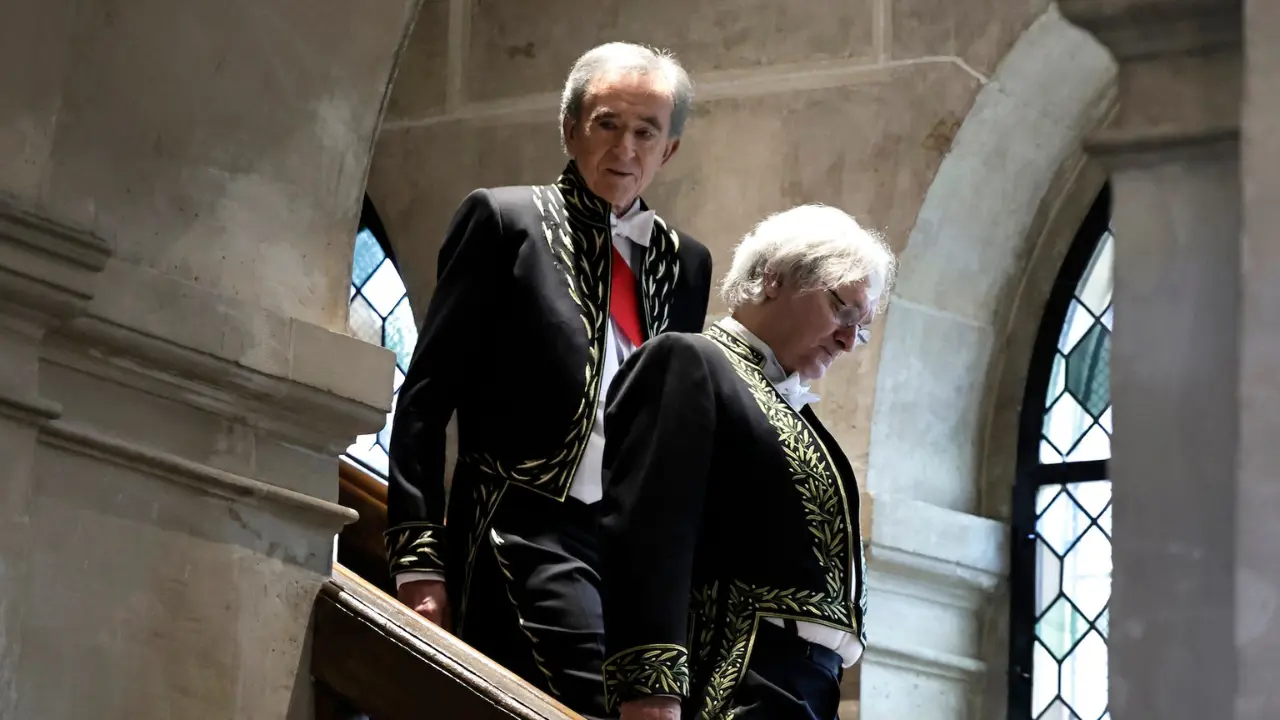
Arnault maintains a more traditional corporate profile. His influence comes mainly through LVMH, French business, fashion, art, retail, and global brand ownership. LVMH also states that he was elected to the Academy of Moral and Political Sciences in December 2024.
Wealth and Ownership
Any comparison of Peter Thiel and Bernard Arnault must treat net worth estimates carefully. Such figures change because they depend on public share prices, private-company estimates, currency rates, debts, and family holding structures.
Arnault’s wealth closely follows the value of LVMH and related family holdings. Thiel’s fortune reflects interests in public and private technology companies, investment funds, and other assets. Forbes describes Arnault as overseeing an empire of 75 fashion and cosmetics brands and notes that LVMH acquired Tiffany & Co. in 2021 for $15.8 billion.
The exact ranking matters less than the source of their wealth. Both men became extremely wealthy because they maintained meaningful ownership in assets that grew over long periods.
Business Lessons From Their Careers
The careers of Peter Thiel and Bernard Arnault provide useful lessons for founders and investors. First, ownership matters. A salary can build financial security, but equity in a successful company can create much greater long-term wealth.
Second, a powerful business needs a clear advantage. Thiel seeks technology companies with unique products, networks, or knowledge. Arnault develops brands supported by heritage, craftsmanship, controlled supply, and emotional value.
Third, large results require patience. PayPal, Palantir, Dior, and LVMH grew through years of repeated decisions. Their success came from disciplined capital use, careful leadership, and commitment during changing market conditions.
Finally, both men show the value of independent thinking. Thiel challenges common views about competition and startups. Arnault recognized that famous luxury houses could become stronger inside a carefully managed global group without losing their individual identities.
Final Thoughts
Peter Thiel and Bernard Arnault stand in very different parts of the modern economy, yet both built power through ownership, focus, and long-term strategy. Thiel represents the speed and risk of technology, while Arnault represents the lasting value of heritage, premium brands, and controlled growth.
Their stories show that success can come from inventing the future or from protecting and expanding the strongest parts of the past. For students, founders, and investors, the lesson remains clear: understand your field, build a real advantage, keep valuable ownership, and make decisions with a long-term view.