Choosing the Right Catering Equipment for a Successful Hospitality Business
Introduction
Running a hospitality business involves managing numerous responsibilities, from maintaining food quality and serving customers to organising employees and controlling operating expenses. Behind these activities is a kitchen that must function reliably throughout the working day. The equipment used in this environment plays an important role in determining how efficiently staff can prepare meals, manage ingredients and maintain consistent service.
For restaurants, hotels, pubs, cafés, schools and care facilities, choosing suitable catering equipment is an important business decision. The right appliances can support daily operations, while unsuitable purchases may create unnecessary complications, consume valuable space or fail to meet the demands of a busy kitchen.
Understanding what to purchase, how much capacity is required and which suppliers can provide installation support makes the process considerably easier.
Start With the Requirements of Your Establishment
Every catering business has different priorities. A traditional restaurant may require several cooking stations, professional ovens and substantial refrigeration capacity. A café might place greater importance on compact preparation equipment, under-counter storage and efficient dishwashing facilities.
Before comparing products, business owners should examine their existing operations or prepare a detailed list of requirements for a new premises.
Consider the following questions:
- How many meals are prepared during a typical service?
- Which cooking methods are used most frequently?
- How much refrigerated storage is required?
- How many employees work in the kitchen?
- Is the available space sufficient for the planned equipment?
- Will the business need additional capacity in the future?
Answering these questions provides a clearer understanding of what the kitchen actually needs.
Businesses searching for reliable Catering Equipment Suppliers Shrewsbury can benefit from considering suppliers that understand the different requirements of hospitality and public-sector environments.
Cooking Appliances Form the Foundation of Food Preparation
Cooking equipment is central to almost every professional catering operation. The appliances selected should reflect the menu, preparation techniques and expected workload.
Commercial ovens are particularly important for establishments that prepare baked dishes, roasted meals and large quantities of food. Depending on the operation, businesses may require conventional ovens, combination ovens or specialist cooking appliances.
Microwaves can provide additional flexibility for reheating and certain preparation tasks, while commercial steamers are useful for cooking vegetables and other ingredients using steam.
It is important to consider more than the appliance’s advertised features. Internal capacity, operating controls, cleaning requirements and available installation space should all influence purchasing decisions.
A well-selected range of cooking appliances allows employees to organise their responsibilities and manage different preparation tasks without placing unnecessary pressure on individual workstations.
Refrigeration Is Essential for Ingredient Management
Food storage is another major consideration when developing a professional kitchen. Fresh ingredients, prepared products and other temperature-sensitive items require appropriate refrigeration.
Businesses should assess both the volume and type of ingredients they regularly store. A restaurant with extensive fresh produce requirements may need larger refrigeration units, while establishments with restricted floor space could benefit from under-counter models.
Freezers may also be necessary for businesses that store frozen ingredients or prepare certain products in advance.
When comparing refrigeration equipment, consider storage capacity, temperature controls, accessibility and energy consumption. Door arrangements and internal shelving can also influence how conveniently staff retrieve ingredients during busy periods.
Equipment should be positioned so that employees can access stored products without obstructing preparation areas or creating unnecessary movement around the kitchen.
Dishwashing Capacity Can Influence Service Efficiency
Cleaning is an essential part of every commercial catering operation. During busy periods, plates, utensils, cookware and preparation equipment accumulate quickly.
Domestic dishwashers are generally not designed for the demanding workloads found in professional kitchens. Commercial dishwashers offer options intended for establishments that need to process larger quantities of dishes within operational timeframes.
The appropriate model depends on the number of covers, available space and the type of items being cleaned.
Businesses should also consider the location of washing facilities. A properly organised washing area can help separate cleaning activities from food preparation and reduce unnecessary interruptions.
Selecting suitable dishwashing equipment is therefore not simply about convenience. It is part of creating an organised kitchen where employees can maintain consistent working routines.
Stainless Steel Equipment for Practical Working Areas
Work surfaces and storage arrangements have a considerable influence on everyday kitchen activities.
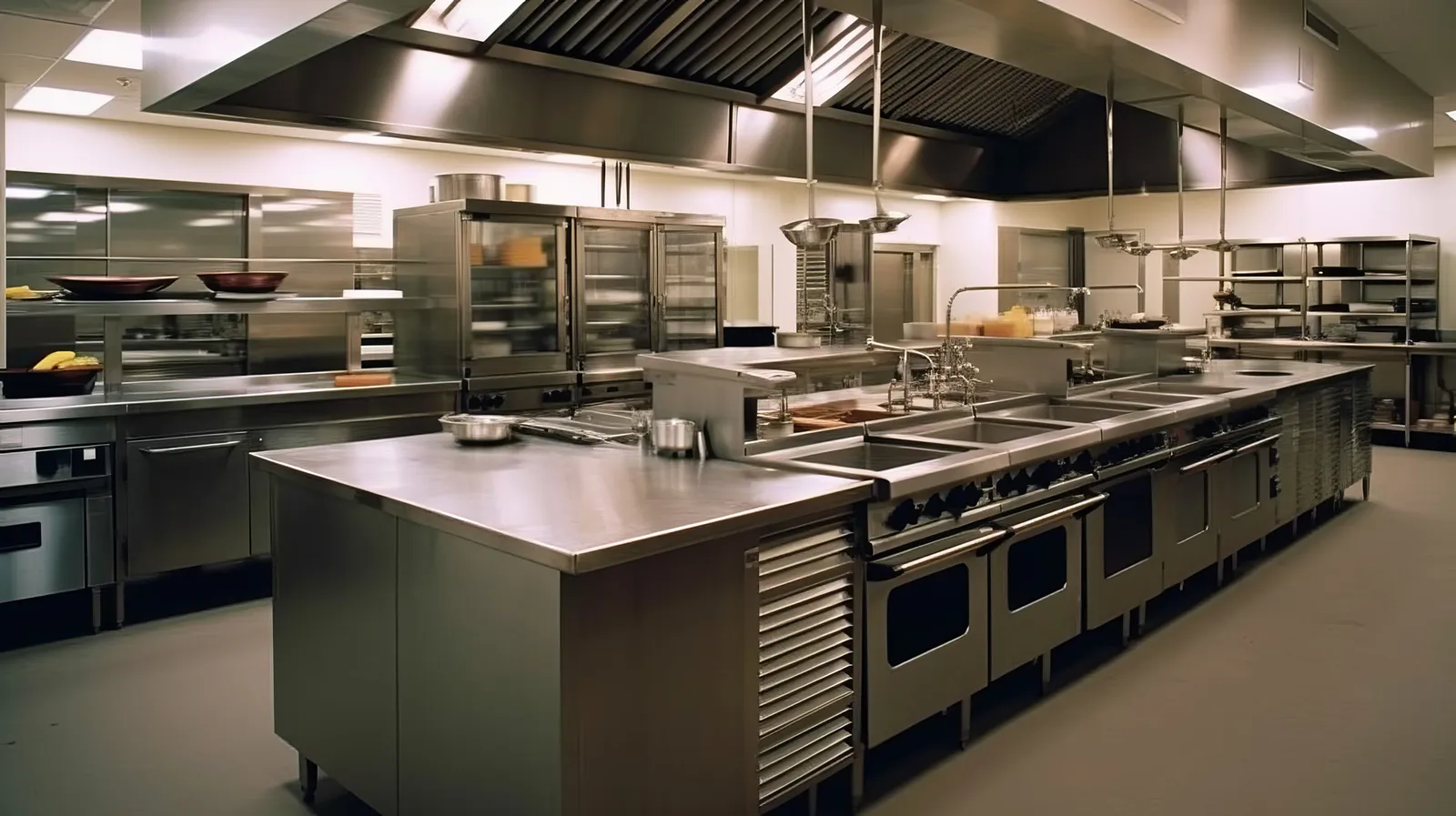
Stainless-steel tables, sinks, cupboards and workstations are widely used in commercial catering environments because they provide durable surfaces suitable for regular cleaning and demanding working conditions.
The layout of these items should reflect the preparation tasks taking place in each section of the kitchen.
For example, preparation tables should provide enough working space for employees to handle ingredients comfortably. Sinks need to be positioned conveniently for washing activities, while storage cupboards should keep essential equipment accessible without overcrowding the workspace.
Businesses should also consider the height, dimensions and configuration of workstations. Small layout improvements can make daily activities more convenient and help employees maintain an organised environment.
Ventilation and Extraction Require Proper Planning
Professional cooking produces heat, steam and airborne grease. These conditions make suitable ventilation and extraction important elements of commercial kitchen planning.
An extraction system should be appropriate for the cooking appliances installed beneath it and the overall requirements of the premises.
Poorly planned ventilation can make the working environment uncomfortable, particularly when several cooking appliances operate simultaneously. It is therefore sensible to consider extraction requirements during the initial design process rather than treating ventilation as a separate finishing task.
Businesses should also account for access to filters and other components that require periodic cleaning and maintenance.
Professional advice can help determine an appropriate arrangement for the premises and ensure that ventilation is considered alongside the wider kitchen installation.
Why Choosing the Right Supplier Matters
Purchasing individual appliances from different sources may appear straightforward, but coordinating multiple products, delivery arrangements and installation requirements can become complicated.
A supplier offering a broader range of commercial catering equipment can make the process easier to organise. Businesses can explore different appliance categories while considering how each item will fit into the overall kitchen setup.
When comparing Catering Equipment Suppliers Shropshire, it is worth examining the available product range, experience, installation services and ongoing support.
PP Catering Services provides catering equipment for hospitality and public-sector establishments, including restaurants, hotels, pubs, bars, schools, health clubs and care homes. Its offering covers cooking appliances, refrigeration, commercial dishwashers, stainless-steel equipment and ventilation solutions.
The company also provides equipment installation and can support staff familiarisation where required. This can be particularly useful when a business introduces unfamiliar appliances or completes a significant kitchen upgrade.
Installation and Maintenance Should Be Part of the Budget
An equipment purchase should not be evaluated solely by its initial price. Installation, maintenance and potential servicing requirements also contribute to the overall investment.
Some appliances require particular electrical, plumbing or ventilation arrangements. Understanding these requirements before purchasing can help prevent unexpected complications during installation.
Once the kitchen is operational, regular maintenance becomes important. Staff should follow suitable cleaning procedures, report equipment problems and ensure that appliances are used according to their operating instructions.
Planned servicing can also help businesses identify developing issues and maintain equipment in appropriate working condition.
A realistic budget should therefore include both the purchase price and the resources needed to support the equipment throughout its working life.
Preparing for Future Business Requirements
Hospitality businesses often experience changes in customer demand, menus and service arrangements. An establishment that initially operates on a small scale may eventually require additional preparation facilities or greater storage capacity.
Thinking about future requirements can help avoid purchasing equipment that quickly becomes unsuitable.
For example, selecting a refrigeration system with appropriate additional capacity may provide greater flexibility as ingredient requirements increase. Similarly, leaving sufficient room for another preparation station could make future expansion easier.
The objective is not necessarily to purchase the largest appliances available. Instead, businesses should select equipment that meets present requirements while allowing practical improvements when circumstances change.
Making Informed Equipment Decisions
A successful commercial kitchen is built through careful planning rather than individual purchasing decisions. Cooking appliances, refrigeration, dishwashing facilities, stainless-steel workstations and extraction systems must work together as part of an organised environment.
For hospitality businesses throughout Shrewsbury and the wider Shropshire area, choosing suitable equipment and professional installation support can make a meaningful difference to everyday operations.
Also read: New Restaurant Table Bases, Same Tops: When a Partial Replacement Makes Sense
By understanding their requirements, comparing appropriate solutions and considering long-term maintenance, business owners can create kitchens that support their employees, accommodate customer demand and provide a dependable foundation for continued business development.