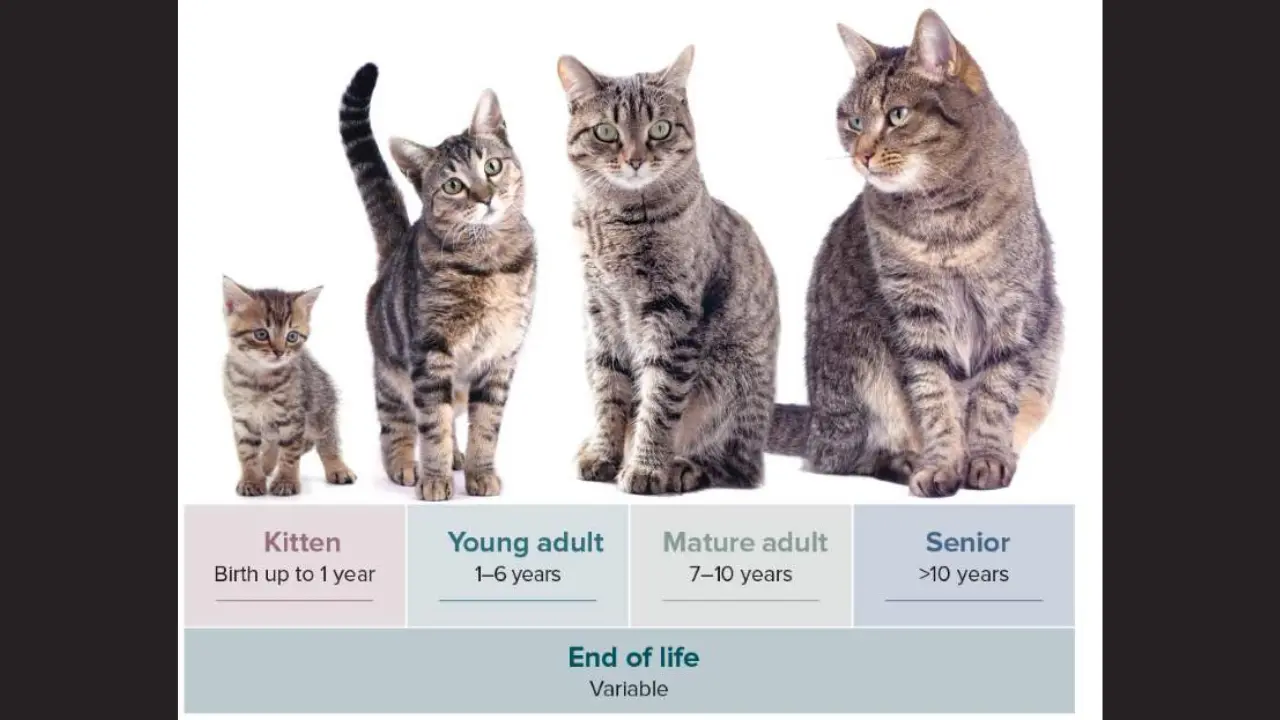
Kitten Age Chart Weight, Teeth, and Feeding Stages
A kitten age chart helps cat owners estimate a young cat’s age by checking its eyes, ears, teeth, weight, movement, and behavior. Knowing the likely age is important because a newborn kitten needs completely different food, warmth, and care than an eight-week-old kitten.
Age estimation is especially useful when someone finds an abandoned litter or adopts a kitten without a known birth date. Kittens grow quickly during their first weeks, and their appearance and abilities may change within only a few days.
However, one physical sign cannot provide a perfect answer. The safest estimate comes from comparing several features and asking a veterinarian to confirm the kitten’s age when possible.
Why Knowing a Kitten’s Age Matters
A kitten’s age affects almost every part of its daily care. Very young kittens cannot control their body temperature, eat solid food, walk properly, or pass waste without help.
Older kittens need social play, a balanced growth diet, vaccines, parasite control, and a safe place to explore. Providing care for the wrong age group may cause feeding, health, and development problems.
Correct age estimation also prevents serious feeding mistakes. Newborn kittens need their mother’s milk or a commercial kitten milk replacer. Cow’s milk does not provide the right balance of nutrients for a growing kitten.
Weaning kittens need soft food made for growth, while older kittens usually need a complete kitten diet until they reach maturity. Foods designed for adult cats may not provide enough energy and nutrients for rapid growth.
Age also guides preventive veterinary care. Kittens commonly begin their vaccine series at about six to eight weeks of age. They then receive additional doses according to the schedule recommended by their veterinarian.
Meekah Net Worth, Age, Income, Wife, Lifestyle (Kaitlin Becker)
How a Kitten Age Chart Works
A kitten age chart compares physical and behavioral milestones across the first weeks and months of life. Important clues include whether the eyes are open, whether the ears are folded or upright, and which teeth are present.
Movement also provides useful information. A newborn cannot stand, while a two-week-old kitten may take shaky steps. By four weeks, most healthy kittens can walk, run, play, and explore their surroundings.
Weight can support an age estimate, but owners should never use it alone. Healthy kittens can vary because of breed, nutrition, sex, litter size, genetics, and health.
A poorly fed kitten may weigh much less than another kitten of the same age. For this reason, owners should compare weight with the kitten’s eyes, ears, teeth, coordination, and feeding ability.
Kitten Age Chart by Week
The following table explains the common changes that occur during kitten development. These ages are general estimates because kittens do not all grow at exactly the same speed.
| Estimated Age | Eyes and Ears | Movement and Behavior | Feeding and Care |
|---|---|---|---|
| Newborn to 1 week | Eyes closed and ears folded | Cannot stand and spends most of the day sleeping | Needs milk, warmth, and bathroom stimulation |
| 1 to 2 weeks | Eyes begin opening and ears unfold | Crawls and takes very shaky steps | Fully dependent on milk and external warmth |
| 2 to 3 weeks | Eyes open and ears become upright | Starts standing, walking, and interacting | Milk remains the main food |
| 3 to 4 weeks | Baby teeth begin appearing | Walks better, plays, and explores | Weaning can begin with soft kitten-food gruel |
| 4 to 6 weeks | Ears are upright and teeth are visible | Runs, pounces, wrestles, and improves balance | Eats kitten food but may continue nursing |
| 6 to 8 weeks | Adult eye color may begin appearing | Jumps, grooms, climbs, and uses a litter box | Usually becomes fully weaned |
| 8 to 12 weeks | Looks like a smaller adult cat | Shows strong coordination and active social play | Eats solid kitten food and needs routine vet care |
| 3 to 6 months | Permanent teeth replace baby teeth | Displays high energy and confident play | Needs regular meals and complete growth food |
| 6 to 12 months | Develops a near-adult body shape | Shows adolescent behavior and independence | Continues growing and usually eats kitten food |
This kitten age chart works best when several features match at the same time. For example, a kitten with open eyes but partly folded ears is probably younger than one with upright ears, visible teeth, and steady walking.
Veterinary advice is especially important when a kitten appears weak, injured, underweight, sick, or delayed in its development. Illness and poor nutrition can make a kitten appear younger than it actually is.
The Neonatal Stage
Newborn kittens depend completely on their mother or an experienced caregiver. Their eyes remain closed, their ears are folded, and they cannot stand or control their own body temperature.
A newborn kitten may weigh only a few ounces. Its umbilical cord may still be visible during the first few days, and it spends most of its time sleeping or feeding.
Most kittens begin opening their eyes between seven and fourteen days after birth. Their eyesight remains unclear at first, so they depend more strongly on smell, touch, and warmth.
A veterinarian should examine a kitten whose eyes have not opened after fourteen days. Swelling, discharge, redness, or bulging around the eyelids also requires professional care.
Young kittens cannot pass urine and stool independently. Their mother normally stimulates them by licking, but an orphaned kitten may need gentle stimulation with a warm, damp cloth after feeding.
Neonatal kittens must also remain warm. They cannot regulate their temperature properly, and feeding a cold kitten may be dangerous. A chilled kitten should be warmed gradually before feeding.
Clix Net Worth, Age, Career, Girlfriend & Bio
Two to Four Weeks: Walking, Teeth, and Early Play
At around two weeks, kittens become more alert and begin trying to stand. Their first steps look weak and shaky, but their muscles and coordination improve quickly.
By the third week, many kittens can walk more confidently. They may interact with their littermates, respond to nearby movement, and show the first signs of playful behavior.
Baby teeth also begin appearing during this stage. The small front teeth often become visible first, followed by other baby teeth over the next several weeks.
Teeth can help a veterinarian estimate age when the kitten’s weight does not match its other physical features. However, tooth development can also vary slightly between individual kittens.
A low-sided litter tray may be introduced as the kitten gains better movement and bathroom control. Owners should place the tray in an easy-to-reach location and guide the kitten gently after meals.
Four to Eight Weeks: Weaning and Fast Growth
Weaning usually begins at around three to four weeks of age. A caregiver can offer a soft mixture made from kitten food and commercial kitten milk replacer.
At first, the mixture should have a thin and smooth texture. It can gradually become thicker as the kitten learns to lap, chew, and eat without help.
By five to six weeks, many kittens regularly eat kitten food even if they continue nursing. Their mother may slowly reduce nursing as the kittens become more independent.
At around eight weeks, most kittens are fully weaned and can receive their nutrition from a complete food made for kitten growth. Their coordination, grooming, litter habits, and confidence also improve greatly.
Play becomes a major part of daily life during this stage. Kittens chase, pounce, wrestle, climb, and explore objects around them.
These activities help develop balance, strength, hunting skills, and social limits. Littermates can teach each other that biting or scratching too hard may cause the game to stop.
Eight to Twelve Weeks: Social Skills and Independence
An eight-week-old kitten usually eats independently, uses a litter box, and moves with good coordination. Many kittens at this age weigh around two pounds, although weight can vary.
The ASPCA explains that kittens around two months old commonly eat on their own and can walk, run, and play with good control. These features can provide a more useful estimate than weight alone.
This period is also important for social learning. Positive contact with calm people, safe toys, scratching posts, carriers, and normal household sounds can help a kitten become more confident.
Owners should keep every experience controlled and pleasant. Forcing a frightened kitten to interact may increase fear rather than improve social behavior.
Kittens at this age also need veterinary guidance about vaccinations, deworming, flea control, microchipping, and spaying or neutering. The correct timing may depend on the kitten’s weight, health, lifestyle, and local veterinary guidance.
Three to Six Months: The Juvenile Stage
Between three and six months, kittens begin looking less like small babies. However, they continue to grow quickly and still require food made specifically for development.
Their legs may appear long, their paws may look large, and their energy level often remains very high. They climb, jump, chase toys, and test household boundaries.
Permanent teeth also begin replacing baby teeth during this stage. Teething may increase chewing, so owners should secure electrical cords, medicines, strings, plants, and other household hazards.
Safe toys and regular play sessions can direct hunting behavior toward suitable objects. Owners should avoid encouraging kittens to attack hands or feet during play.
Kittens require more food per pound of body weight than adult cats. Cornell advises that kittens up to six months often do well with three meals per day.
Kittens between six months and one year may do well with two daily meals. However, owners should follow the food label and their veterinarian’s advice when deciding portion sizes.
Six to Twelve Months: Moving Toward Adulthood
From six months onward, growth starts slowing, but most cats have not reached full maturity. Their bodies become more muscular, balanced, and similar to those of adult cats.
Adolescent behavior may include rougher play, increased independence, and attempts to explore outside familiar areas. Regular exercise and environmental enrichment can help control boredom and destructive behavior.
Many kittens approach adult body size at around ten months, although genetics and breed affect the timing. Some larger cat breeds may continue developing for much longer.
VCA reports that growth slows as kittens reach most of their expected adult size. Many cats reach adult body size at around forty weeks, though individual development can vary.
Most kittens should continue eating a complete growth diet until about twelve months or until a veterinarian confirms maturity. Switching too early may reduce the energy and nutrients needed for healthy development.
Using the Kitten Age Chart for Feeding
Using a kitten age chart can help owners select food that matches the kitten’s physical abilities. A kitten with closed eyes that cannot stand needs milk, warmth, and intensive neonatal care.
A kitten with visible teeth and steady walking may be ready to begin weaning. Meanwhile, a confident eight-week-old kitten should normally be eating complete solid kitten food.
Never feed a kitten cow’s milk or place it on its back during bottle-feeding. Bottle-fed kittens should lie on their stomachs in a natural nursing position.
The amount and timing of formula depend on the kitten’s age, weight, health, and the directions printed on the milk-replacer product. Caregivers should not force formula into a kitten’s mouth.
Steady weight gain is an important sign that feeding is working. Very young kittens should be weighed regularly with a small digital scale, and owners should record the results.
A kitten that loses weight, stops gaining, refuses food, cries constantly, or becomes weak needs prompt veterinary attention. Failure to gain weight may signal illness or inadequate nutrition.
Warning Signs That Need Veterinary Care
Age estimation cannot replace a proper health examination. Owners should seek veterinary help if a kitten develops breathing trouble, severe diarrhea, repeated vomiting, extreme weakness, pale gums, seizures, or serious injuries.
Eye discharge, heavy flea infestation, refusal to eat, ongoing crying, or a swollen abdomen may also indicate a health problem. Young kittens can become seriously ill very quickly.
A cold, limp, or unresponsive neonatal kitten needs urgent help. Warm the kitten gradually and contact a veterinarian, shelter, or experienced rescue organization.
Developmental delays should also receive attention. Warning signs include eyes that remain closed after fourteen days, failure to gain weight, difficulty standing, or continued trouble passing urine or stool.
Can Weight Determine a Kitten’s Exact Age?
Weight provides a useful clue, but it cannot determine age perfectly. Some healthy kittens naturally grow faster or slower than others.
Nutrition also changes a kitten’s weight. A malnourished eight-week-old kitten may weigh as little as a healthy kitten that is several weeks younger.
Breed and genetics can also influence body size. Owners should therefore combine weight with teeth, eye development, ear position, movement, feeding ability, and behavior.
Conclusion
A kitten age chart provides a practical starting point for understanding a young cat’s growth, feeding needs, behavior, and health care. Owners should compare the eyes, ears, teeth, weight, coordination, and eating ability instead of trusting one sign alone.
Every kitten develops at a slightly different speed, and health problems may affect normal growth. When a kitten’s history is unknown or its condition appears poor, a veterinarian can provide the safest age estimate and care plan.